Welcome to a tasty journey with my Mediterranean Hummus Platter! This fresh and flavorful feast brings together creamy hummus and crisp veggies. It’s perfect for parties or a cozy night in. You’ll find simple steps, tips for great taste, and fun variations. Ready to impress your family and friends? Let’s dive into the vibrant world of Mediterranean flavors that will brighten any meal.
Why I Love This Recipe
- Deliciously Creamy: This hummus is exceptionally smooth and rich, making it a perfect dip for any occasion.
- Vibrant Presentation: The colorful arrangement of fresh veggies and feta adds a visual appeal that is hard to resist.
- Healthy Choice: Packed with protein and healthy fats, this platter is not only tasty but also nutritious.
- Versatile Serving: Great as an appetizer, snack, or even a light meal, it suits various dining occasions.
Ingredients
Main Ingredients for Hummus
To make a creamy hummus, you need:
- 1 cup canned chickpeas, thoroughly drained and rinsed
- 1/4 cup creamy tahini
- 2 tablespoons extra-virgin olive oil, plus more for drizzling
- 1 garlic clove, finely minced
- Fresh juice of 1 lemon (approximately 2 tablespoons)
- 1/2 teaspoon ground cumin
- Sea salt, to taste
- 1/4 teaspoon smoked paprika, plus extra for garnish
These main ingredients form the base of your hummus. The chickpeas add protein and texture. Tahini gives it a nutty depth. Olive oil adds richness. Garlic and lemon bring flavor, while cumin adds warmth. Smoked paprika gives a nice color and extra taste.
Fresh Vegetables and Garnishes
You also want to include fresh veggies and garnishes:
- 1/2 cup diced refreshing cucumber
- 1/2 cup juicy cherry tomatoes, halved
- 1/4 cup kalamata olives, pitted and sliced
- 1/4 cup crumbled tangy feta cheese
- Fresh parsley, finely chopped for a bright garnish
- Pita bread, cut into wedges for serving
These veggies not only look great on your platter, but they also add crunch and freshness. The cucumber and tomatoes are juicy and light. Olives add a briny punch, while feta brings creaminess. Parsley adds a pop of green and great aroma.
Optional Add-ins and Toppings
For added flavor, consider these optional toppings:
- Roasted red pepper
- Pine nuts
- Sun-dried tomatoes
- Capers
These add-ins can enhance your platter. Roasted red peppers add sweetness, while pine nuts give a nice crunch. Sun-dried tomatoes bring a tangy richness, and capers add a salty kick. Feel free to mix and match to create your perfect Mediterranean hummus platter.
Step-by-Step Instructions
Preparing the Hummus Base
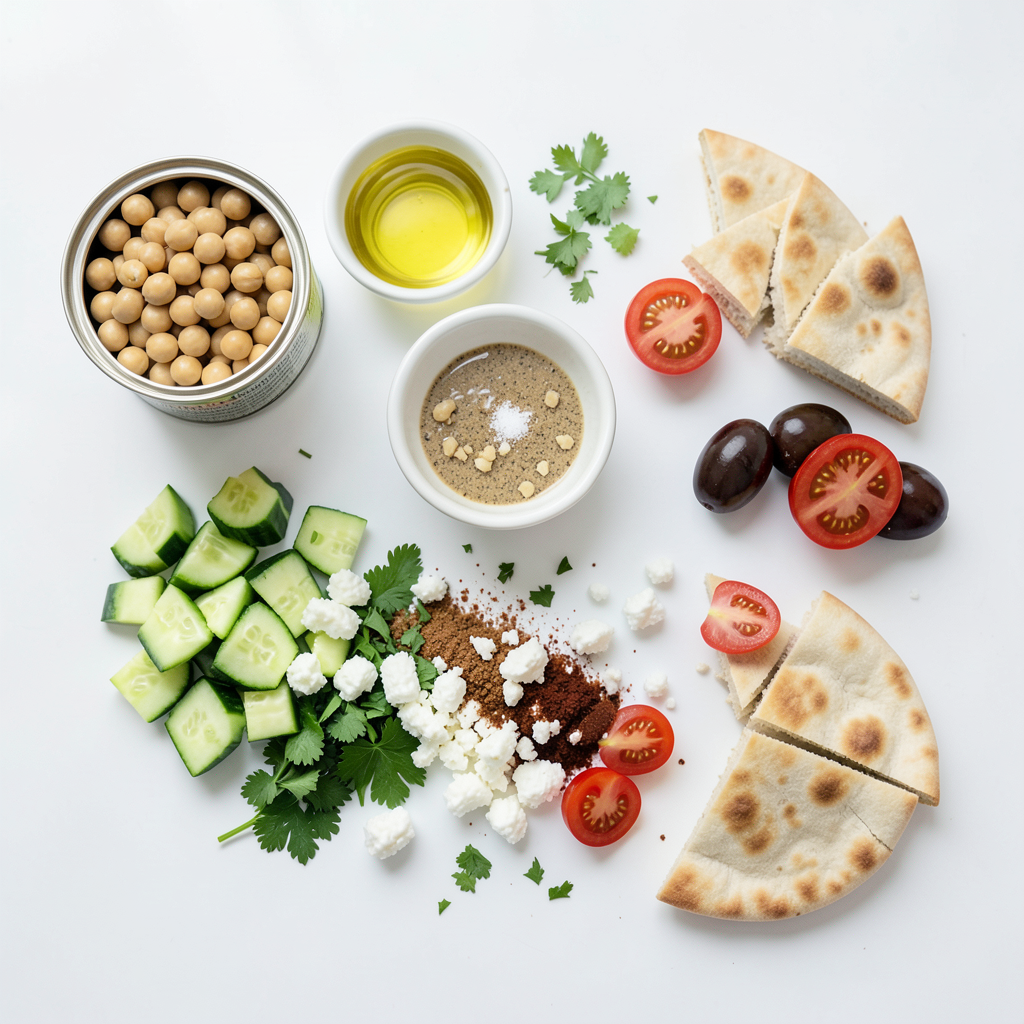
To start, gather your ingredients. You will need 1 cup of chickpeas, 1/4 cup of tahini, and 2 tablespoons of olive oil. Also, grab 1 minced garlic clove, juice from 1 lemon, 1/2 teaspoon of cumin, sea salt, and 1/4 teaspoon of smoked paprika.
1. In a food processor, combine the chickpeas, tahini, olive oil, garlic, lemon juice, cumin, and a pinch of sea salt.
2. Blend until smooth. If it's too thick, add a tablespoon of water. Keep blending until you reach a creamy texture.
3. Taste your hummus. If it needs more flavor, add salt or lemon juice to brighten it up.
Assembly of the Platter
Now it's time to make your platter look amazing!
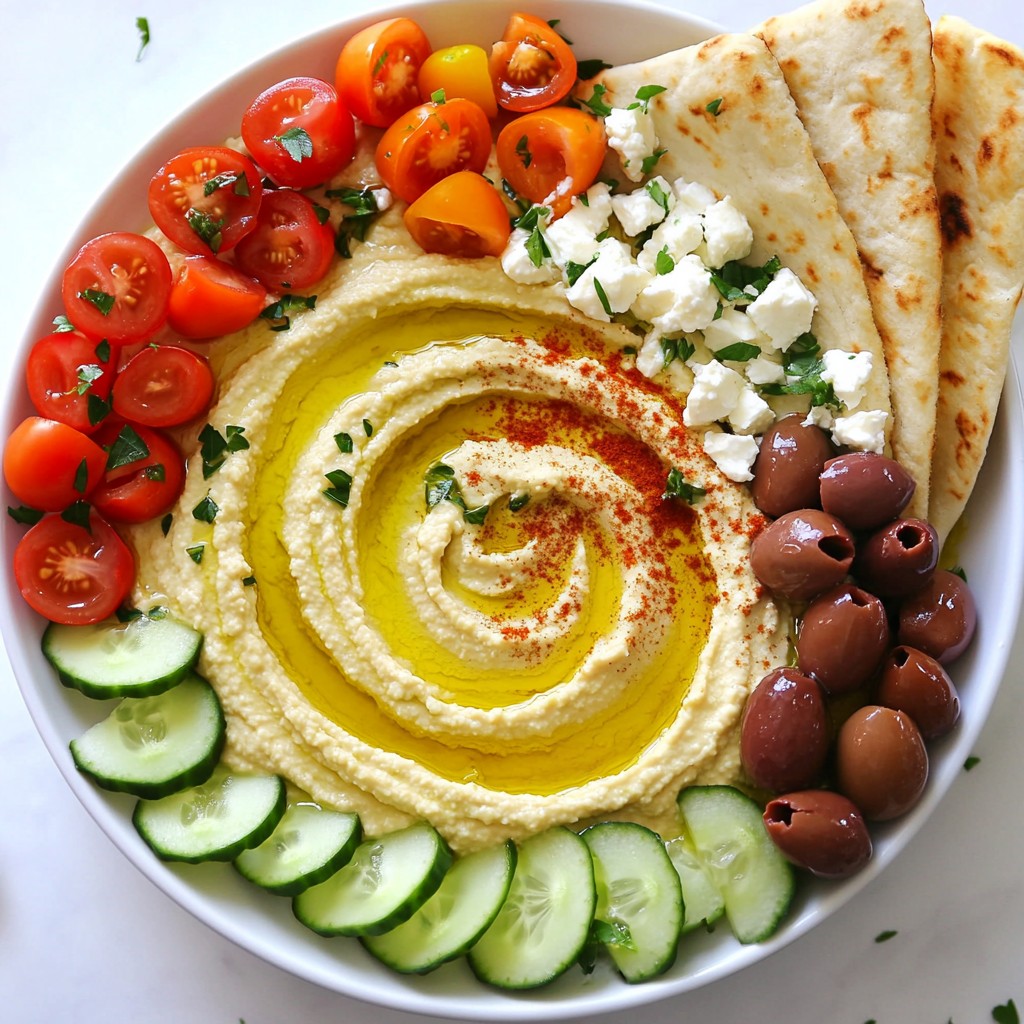
1. Take a shallow serving bowl and gently spoon the hummus into the center.
2. Use the back of a spoon to create a swirl on top. This adds a nice touch.
3. Drizzle some olive oil over the hummus. Then, sprinkle smoked paprika for color and taste.
4. Arrange the diced cucumber, halved cherry tomatoes, sliced olives, and crumbled feta around the hummus. Make it colorful and inviting!
5. Finish off by sprinkling fresh parsley on top for a pop of green.
Tips for Presentation
Good presentation can make your dish stand out. Here are some helpful tips:
- Use a variety of colors and shapes in your veggies. This adds visual interest.
- Serve the platter on a large board to give it a rustic feel.
- Place pita bread wedges in a bowl or on the side for easy dipping.
- Consider adding a few extra garnishes, like lemon slices or whole olives, for a fun twist.
With these steps, your Mediterranean hummus platter will be fresh, colorful, and full of flavor. Enjoy it with family and friends!
Tips & Tricks
Achieving the Perfect Hummus Consistency
To make smooth and creamy hummus, start with well-drained chickpeas. If your hummus is thick, add water slowly. Blend until it feels silky. You want a dip that is easy to scoop. Test the texture before serving.
Enhancing Flavor with Seasoning
Seasoning is key for great hummus. Start with sea salt and ground cumin. Add lemon juice for tanginess. Smoked paprika brings warmth and color. Taste as you mix. Adjust the flavors to suit your taste buds. Fresh garlic adds a nice kick too.
Storage Tips for Freshness
Store any leftover hummus in an airtight container. It stays fresh in the fridge for up to two days. Cover the top with olive oil to keep it moist. When ready to serve, give it a stir. If it thickens, add a splash of water.
Pro Tips
- Use Fresh Ingredients: Always opt for the freshest vegetables and herbs you can find to enhance the flavor and presentation of your platter.
- Customize Your Hummus: Feel free to add ingredients such as roasted red peppers or sun-dried tomatoes to your hummus for a unique twist.
- Chill for Flavor: Let your hummus rest in the refrigerator for at least 30 minutes before serving; this allows the flavors to meld together beautifully.
- Garnish Creatively: Experiment with different garnishes like toasted pine nuts or a sprinkle of za'atar for added texture and flavor appeal.
Variations
Different Flavor Profiles (Spicy, Herby, etc.)
You can change the taste of your hummus easily. To make it spicy, add cayenne pepper or red pepper flakes. Start with a pinch and taste as you go. If you want a herby flavor, mix in fresh herbs like basil or cilantro. These herbs add a fresh twist that brightens the dish. Experiment with different spices like sumac or za'atar for even more depth.
Alternative Ingredients for a Vegan Option
This hummus is already vegan, but you can switch things up. If you want a nutty flavor, try adding roasted nuts like almonds or pine nuts. You can also replace tahini with sunflower seed butter for a nut-free option. Just keep the chickpeas for the creamy base, and you will have a tasty vegan treat.
Seasonal Vegetable Suggestions
Using seasonal veggies can add great color and taste. In spring, try adding thinly sliced radishes and asparagus. In summer, use sweet bell peppers and zucchini. In fall, roasted butternut squash can bring warmth to the platter. For winter, think about using roasted carrots or Brussels sprouts. These fresh, seasonal choices will make your platter even more exciting and delicious.
Serving Suggestions
Pairing with Other Mediterranean Dishes
You can make your Mediterranean hummus platter even better by pairing it with other dishes. Try serving it with tabbouleh, a fresh parsley salad. This adds a bright flavor. You might also enjoy dolmas, which are grape leaves stuffed with rice. They add a nice texture. Fattoush salad, with its crispy bread and tangy dressing, complements the hummus well too. These dishes create a feast full of flavor!
Best Drinks to Serve Alongside
When it comes to drinks, you have great options. A chilled glass of white wine, like Sauvignon Blanc, pairs nicely. If you prefer non-alcoholic drinks, try sparkling water with lemon. It adds a refreshing touch. A mint tea can also enhance the Mediterranean vibe. These drinks will keep your guests happy and refreshed.
Platter Size for Different Occasions
The size of your platter matters. For a small gathering, you can use a medium plate. This works well for four people. If you host a larger crowd, consider a larger serving tray. This way, everyone can enjoy the hummus and dips. You can fill it with more veggies and pita bread. Adjust the ingredients to fit your guest count. A well-prepared platter makes for a delightful presentation!
FAQs
Can I make hummus in advance?
Yes, you can make hummus ahead of time. It tastes great when made a few hours before serving. The flavors mix better after resting. Just cover it tightly and store it in the fridge.
How long does homemade hummus last?
Homemade hummus lasts about four to five days in the fridge. Make sure to keep it in a sealed container. If it looks or smells off, it's best to throw it out.
What can I substitute for tahini?
If you don’t have tahini, you can use peanut butter or sunflower seed butter. Both give a creamy texture and nutty flavor. You can also skip it and add more olive oil for smoothness.
Is Mediterranean hummus healthy?
Yes, Mediterranean hummus is healthy! It is full of protein from chickpeas and healthy fats from olive oil. Plus, it has fresh veggies, making it a great snack or meal.
Can I use other types of beans?
Absolutely! You can use black beans, white beans, or even lentils. Each type will change the flavor a bit, but they all work well. Just keep the same basic recipe for the best results.
In this blog post, we explored the key ingredients, steps, and tips for making delicious hummus. We discussed how to prepare the base, assemble an eye-catching platter, and make your hummus taste great. We also covered unique variations and serving suggestions to fit any occasion.
Hummus is simple to make and adapt to your taste. Experiment with flavors and enjoy a healthy snack or meal. Now, grab some fresh veggies and start creating!